Designing with Soul: The Strategic Application of Handwritten Typography
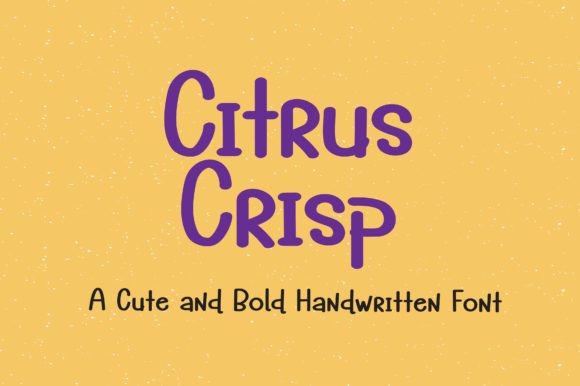
In the vast ecosystem of digital design, the choice of typography often dictates the emotional resonance of a project. While sans-serifs dominate for their legibility and serifs for their tradition, there is a growing demand for typefaces that bridge the gap between digital precision and human touch. Among the myriad of options available to creators, Citrus Crisp stands out not merely as a font, but as a versatile design tool. Described as sweet, friendly, and naturally unique, Citrus Crisp offers a distinct aesthetic that fits a surprisingly large pool of design requirements. However, utilizing a handwritten style effectively requires more than just installation; it demands an understanding of context, audience, and the subtle art of visual hierarchy.
The Psychology of Handwritten Aesthetics
Before diving into the technical application of a font like Citrus Crisp, it is essential to understand the psychological impact of handwritten typography on the viewer. In a world saturated with sterile, geometric interfaces, organic shapes trigger a subconscious sense of warmth and authenticity. When a user encounters a handwritten typeface, the brain often processes it as a personal communication rather than a corporate broadcast.
This psychological shift is crucial for professionals and business owners. A handwritten font suggests approachability and transparency. It signals that there is a human behind the screen, which can be a powerful differentiator in customer service, branding, and educational content. However, this emotional weight must be balanced with clarity. The "sweetness" of a font like Citrus Crisp should enhance the message, not obscure it. For researchers and educators, this balance is particularly delicate; the goal is to appear accessible without sacrificing intellectual authority.
Analyzing the Anatomy of Citrus Crisp
What makes Citrus Crisp particularly fitting for modern design trends? The answer lies in its specific structural characteristics. Unlike chaotic or overly distressed scripts, Citrus Crisp maintains a consistent baseline and legible letterforms despite its natural style. It avoids the common pitfall of handwritten fonts where excessive loops or swashes make reading difficult at smaller sizes.
The font's "crisp" quality implies a sharpness that translates well to both high-resolution screens and print media. For creators and hobbyists, this means the font performs reliably across different mediums. Whether you are designing a wedding invitation, a blog header, or merchandise, the font retains its unique character without becoming muddy. Its sweet aesthetic relies on soft curves and a friendly x-height, making it an ideal candidate for projects intended to evoke joy, relaxation, or creativity.
Strategic Implementation for Business Owners
For business owners, typography is a silent ambassador for the brand. The decision to use Citrus Crisp should be rooted in a strategic assessment of the brand's voice. This font is particularly effective for industries that deal in lifestyle, wellness, food, children’s products, and artisanal goods.
Brand Identity and Logo Design
In logo design, Citrus Crisp can serve as the primary wordmark for brands aiming for a boutique feel. However, it is rarely advisable to use a handwritten font for the entire corporate identity system. A best practice approach involves pairing Citrus Crisp with a clean, geometric sans-serif for body text. This creates a visual hierarchy where the brand personality is established through the header, while the information remains easy to digest through the body copy.
For example, a bakery might use Citrus Crisp for its logo to convey homemade quality, but use a standard sans-serif for the menu descriptions to ensure customers can quickly read prices and ingredients. This duality allows the business to maintain professionalism while exuding warmth.
Marketing and Advertising
In advertising, the goal is often to stop the scroll. Citrus Crisp excels in this area due to its unique style. It stands out against the uniformity of standard web fonts used in banner ads and social media feeds. When used for call-to-action (CTA) phrases, such as "Shop Now" or "Learn More," a friendly handwritten font can reduce the friction of a sales pitch, making the interaction feel more like a recommendation from a friend than a command from a corporation.
However, marketers must be mindful of the "shouting" effect. Overusing a display font can dilute its impact. Citrus Crisp should be reserved for high-impact moments—headlines, pull quotes, or specific keywords—rather than used for long paragraphs of marketing copy.
Applications in Education and Content Creation
The utility of Citrus Crisp extends beyond commercial branding into the realms of education and content creation. For educators, the challenge is often making dense information accessible. Handwritten fonts can humanize educational materials, making them feel less intimidating to students.
Designing Educational Materials
In the creation of worksheets, presentations, and infographics, Citrus Crisp can be used to highlight key takeaways or fun facts. Its sweet nature makes it particularly effective for materials aimed at younger audiences, but it can also be used in adult education to create a more relaxed learning environment. For instance, a history presentation might use a formal serif for the main text but utilize Citrus Crisp for anecdotes or quotes from historical figures to bring their voices to life.
Digital Content and Social Media
For content creators and influencers, visual consistency is key. Citrus Crisp offers a recognizable texture that can tie a visual brand together across platforms like Instagram, Pinterest, and TikTok. It works exceptionally well for overlaying text on images, provided there is sufficient contrast and background simplicity. Creators often use fonts like this to add personal annotations to their visuals, mimicking the experience of a hand-annotated journal or scrapbook.
The font's natural style also bridges the gap between professional production and authentic "behind-the-scenes" content. It suggests that the content was crafted with care, appealing to audiences who value authenticity over high-gloss production values.
Technical Considerations and Usability
While the aesthetic appeal of Citrus Crisp is undeniable, technical application cannot be ignored. Web designers and developers must consider performance and accessibility when integrating custom fonts.
Readability and Accessibility
The primary consideration for any non-standard font is legibility. While Citrus Crisp is designed to be legible, handwritten fonts generally require more cognitive effort to process than standard sans-serifs. Therefore, it should not be used for body text on websites or in long-form reading environments. Doing so can lead to user fatigue and poor accessibility scores, particularly for users with dyslexia or visual impairments.
Best practices dictate that Citrus Crisp should be limited to display sizes—typically 24px or larger. At these sizes, the unique characteristics of the font can be appreciated without hindering reading speed. Developers should also ensure that the font is part of a robust fallback system so that if the font fails to load, the design integrity is maintained with a similar system font.
File Formats and Performance
For web implementation, the font should be optimized in WOFF2 format to ensure fast loading times. Large font files can significantly impact page speed, which is a critical factor for SEO. By subsetting the font—removing unused characters or glyphs—designers can reduce file size while retaining the necessary glyphs for their specific language needs.
Comparative Analysis: When to Choose Citrus Crisp
With thousands of handwritten fonts available, why choose Citrus Crisp? The distinction often comes down to the balance between "character" and "neutrality."
- High-Character Scripts: Fonts with extreme slants, heavy textures, or complex swashes. These are difficult to read and limit use to very large logos or artistic headers.
- Neutral Handwriting: Fonts that mimic standard penmanship but lack distinct flair. These are safe but forgettable.
- The Citrus Crisp Middle Ground: This font occupies a sweet spot. It possesses enough "sweetness" and unique style to be memorable, yet it retains enough structure to be functional. It is an excellent choice for designers who want to inject personality without sacrificing usability.
Future Trends in Typography
The trend toward human-centric design is not slowing down. As artificial intelligence generates more sterile, perfect content, the value of human imperfection increases. Fonts like Citrus Crisp represent a counter-movement to the hyper-digital world. They remind us that design is, at its core, a human endeavor.
We are seeing a rise in "hybrid" branding, where corporate entities adopt friendlier typefaces to appear more relatable. In this landscape, Citrus Crisp is a valuable asset. It allows for the expression of empathy and creativity in fields that are traditionally viewed as rigid. Whether used by a freelancer, a startup, or an educator, the font serves as a reminder that the only limit is the imagination of the creator.
Conclusion on Usage
Ultimately, Citrus Crisp is more than just a set of vector points; it is a communication tool. Its effectiveness depends entirely on the context in which it is placed. By respecting its limitations regarding body text and leveraging its strengths in headers and branding, professionals and hobbyists alike can create designs that are not only visually pleasing but also emotionally resonant. The key is to use it not just as a decoration, but as a voice—one that speaks with clarity, warmth, and a distinct human touch.