Unlocking Creativity with Congklak Playing Font: A Guide to Authentic Handwritten Design
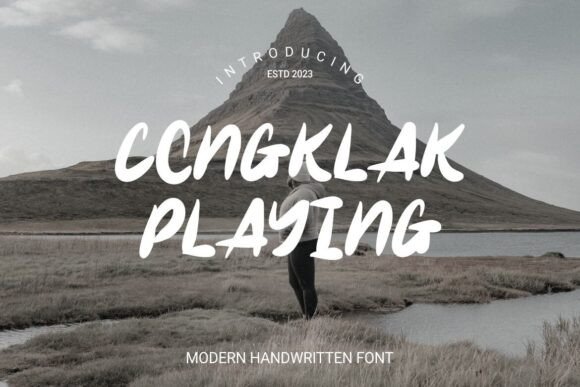
In the vast sea of digital typography, finding a typeface that feels genuinely human can be a challenge. Many designers and creators seek that perfect balance between legibility and personality, a font that looks effortless yet intentional. This is precisely where Congklak Playing Font enters the conversation. Described as a sweet and friendly handwritten font, it offers a natural and unique style that fits a surprisingly wide range of design projects. However, like any specialized tool, its success depends entirely on how it is used. Whether you are a freelancer crafting a logo, a small business owner designing packaging, or a blogger creating social media graphics, understanding how to leverage this font correctly is crucial.
The Allure of Authenticity
The primary appeal of Congklak Playing Font lies in its ability to mimic the organic flow of human handwriting without sacrificing digital consistency. It feels approachable, making it an excellent choice for brands that want to establish a warm, personal connection with their audience. Imagine a children’s book cover, a cozy café menu, or a heartfelt greeting card; the aesthetic of this font naturally evokes feelings of comfort and creativity. It bridges the gap between a sterile digital environment and the tactile warmth of ink on paper. For entrepreneurs, this emotional resonance can be a powerful tool for branding, provided the execution is handled with care.
The Legibility Trap: When Friendly Becomes Frustrating
The most common mistake designers make with handwritten fonts like Congklak Playing is prioritizing style over readability. Because the font features natural curves and a flowing baseline, it can become difficult to decipher when used incorrectly. This is particularly dangerous for essential information. If a potential customer cannot read your store hours, product price, or call to action within seconds, you have lost them.
The Mistake: Using Congklak Playing Font for long paragraphs of body text or for critical data points on a mobile interface. The irregular spacing and character connections, while beautiful, cause eye strain during extended reading.
The Fix: Reserve this font for headers, pull quotes, or short, impactful phrases. For body text, pair it with a clean, highly legible sans-serif font like Open Sans or Lato. This contrast allows the handwritten font to shine as a decorative element while the sans-serif handles the heavy lifting of information delivery. Always test your text at the smallest size it will appear; if you have to squint, the font is too complex for that specific application.
Context Matters: Matching Font to Function
Another frequent oversight is ignoring the context or "voice" of the project. Congklak Playing is described as sweet and friendly, which implies a specific tone. A common error is applying this font to serious, corporate, or high-tech themes where it feels out of place.
The Mistake: Using the font for a law firm’s website, a financial report, or a dark, gritty gaming channel. The disconnect between the serious content and the playful typography undermines the credibility of the message.
The Fix: Evaluate the emotional tone of your project before selecting a font. Congklak Playing excels in niches related to family, food, crafts, education, and lifestyle. If your project requires authority, urgency, or technical precision, this font is likely not the right choice, regardless of how much you personally like the design. A better approach is to create a mood board for your project; if the font fits the visual language of the board, proceed.
Spacing and Sizing: The Technical Nuances
Typography is as much about the space between the letters as the letters themselves. Handwritten fonts often have inconsistent kerning (spacing) built-in to mimic natural writing. However, digital layouts often require manual adjustments to look balanced.
The Mistake: Accepting the default tracking and line height. Because Congklak Playing has a natural style, the default line height might be too tight, causing the loops of 'y' or 'g' to crash into the line below. Similarly, tight tracking can make the letters look like a tangled knot rather than a sentence.
The Fix: Increase your line height (leading) significantly more than you would for a standard block font. A multiplier of 1.5 or even 1.8 often works best for handwritten styles. Additionally, slightly increasing the letter spacing (tracking) by 10 to 20 units can open up the text, making it look airy and elegant rather than cramped. This small technical adjustment transforms the text from "amateurish" to "artisan."
Overuse and Visual Hierarchy
When a designer finds a font they love, the temptation is to use it everywhere. This is known as "font fatigue." If every heading, subheading, and button on a page uses Congklak Playing, the design loses its visual hierarchy. The eye has nowhere to rest, and the unique style of the font becomes monotonous.
The Mistake: Creating a monochromatic typographic environment where one font serves all functions.
The Fix: Establish a clear hierarchy. Use Congklak Playing for the primary H1 or the most emotional element on the page. Use a complementary serif or sans-serif for H2 and H3 headings, and a neutral font for the body. This creates a rhythm in the design. For example, a wedding invitation might use Congklak Playing for the couple's names (the focal point) but a classic serif for the date and venue details. This guides the viewer's eye to what matters most.
Technical Considerations: File Formats and Licensing
Before downloading or purchasing any font, including Congklak Playing, users often overlook the technical requirements and legal boundaries. Using a font without the correct license can lead to legal trouble, and using the wrong file format can break a website’s performance.
The Mistake: Assuming all fonts are free for commercial use or using heavy font files that slow down website loading speeds.
The Better Approach:
- Check Licensing: Always verify if the license covers your intended use (e.g., print vs. web, merchandise). If you are using Congklak Playing for a client logo that will be printed on t-shirts, ensure the license permits embedding in commercial products.
- Optimize Formats: For web use, ensure the font is served in WOFF2 format for the best compression. If you are using it only for a logo, consider converting the text to outlines (vectors) or using an SVG format. This eliminates the need for the user to load the font file entirely, speeding up your site.
Pairing Pitfalls
Pairing fonts is an art form. A common error is pairing Congklak Playing with another decorative or script font. This creates a "clashing" effect where both fonts fight for attention, resulting in a chaotic layout.
The Mistake: Pairing two distinct handwritten fonts together.
The Fix: Follow the principle of contrast. Since Congklak Playing is organic and irregular, pair it with something geometric and structured. A rounded sans-serif often works well because it shares the friendly vibe but offers the stability that the handwritten font lacks. Avoid pairing it with traditional, stiff serif fonts like Times New Roman, as the stylistic gap can feel jarring unless done with extreme expertise.
Final Checklist Before You Design
Before you finalize your design using Congklak Playing Font, run through this quick checklist to ensure quality:
- Zoom Out Test: Does the text remain legible when viewed on a mobile screen or from a distance?
- Color Contrast: Is there sufficient contrast between the text color and the background? Handwritten fonts are thinner than bold sans-serifs, so they require higher contrast to be readable.
- Message Match: Does the "sweet and friendly" nature of the font align with the specific message you are conveying?
- File Optimization: Have you optimized the font file for web use to prevent slow load times?
Congklak Playing Font is a versatile and charming tool that can elevate a design from standard to special. By avoiding these common pitfalls and applying these practical corrections, you ensure that the font serves your content effectively, rather than overshadowing it. Good design is about communication; when used correctly, this font speaks volumes.