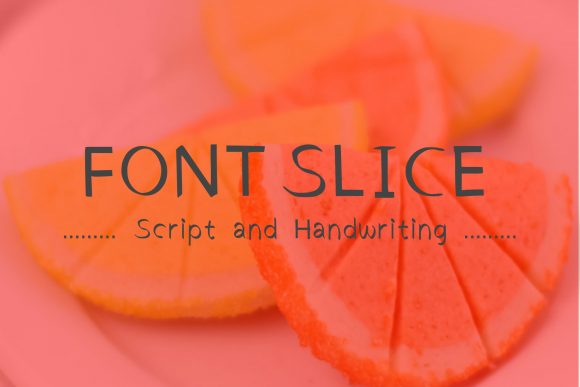
Font Slice: How to Use This Handwritten Font Without Making Common Design Mistakes
Finding the perfect typeface for a project can often feel like searching for a needle in a haystack. You want something with personality, but it must remain professional. You need character, but not at the expense of legibility. Enter Font Slice, a minimal and neat handwritten font designed to bridge that gap. Its clean aesthetic allows it to blend seamlessly into a vast array of creative projects, from digital marketing assets to physical product packaging. However, even the most versatile tools can be misused. To truly make your ideas stand out, you need to understand not just what Font Slice is, but how to handle it correctly.
The Appeal of Minimalist Handwriting
Before diving into the technicalities, it helps to understand why a font like Font Slice resonates with so many different types of creators. In a digital landscape saturated with rigid, geometric sans-serifs and overly ornate scripts, Font Slice offers a middle ground. It mimics the natural flow of human handwriting without the chaotic scratchiness often associated with casual fonts. This makes it incredibly useful for entrepreneurs and bloggers who want to inject a personal touch into their brand voice without sacrificing readability.
Whether you are designing a wedding invitation, crafting social media quotes, or laying out a lifestyle blog, the "neat" aspect of Font Slice is its primary selling point. It suggests authenticity and approachability. However, the very simplicity that makes it appealing is also what leads many users to underestimate its requirements.
Avoiding the "One-Size-Fits-All" Trap
One of the most common mistakes beginners make is assuming that a versatile font works perfectly at any size and in any context. While Font Slice is adaptable, it is still a handwritten typeface at its core. This brings specific constraints that, if ignored, can ruin a design.
A frequent error occurs when designers use Font Slice for long-form body text. Handwritten fonts, even minimal ones, create visual fatigue when readers have to parse entire paragraphs of "script." The human eye is trained to read block text in serif or sans-serif formats. If you use Font Slice for a full product description or a lengthy blog post, you risk losing your audience simply because reading becomes a chore.
The Better Approach: Treat Font Slice as an accent, not the foundation. Use it for headlines, sub-headers, pull quotes, or call-to-action buttons. For the main body text, pair it with a clean, simple sans-serif font like Open Sans, Lato, or Montserrat. This contrast creates a visual hierarchy that guides the reader's eye naturally, allowing Font Slice to add personality without overwhelming the content.
Spacing and Alignment: The Overlooked Details
Typography is often about the invisible space between letters as much as the letters themselves. With handwritten fonts, kerning (the space between specific character pairs) and leading (line height) require more attention than with standard block letters.
Because Font Slice mimics natural handwriting, the connections between letters can sometimes feel tight or awkward if left at default settings. A common oversight is leaving the line height too tight. When handwritten lines of text sit too close together, they merge into a visual blob, making the "neat" quality of the font disappear entirely.
The Better Approach: Be generous with your spacing. Increase your line height (leading) to at least 1.4 or 1.5 times the font size. This gives the script room to breathe and highlights the clean, slice-like cuts of the typeface. Additionally, check your kerning on headlines. If a 'T' and an 'o' look too far apart or too close, manually adjust them. These small tweaks separate amateur designs from professional presentations.
Color and Contrast Missteps
Another area where creators stumble is color application. Font Slice has a delicate, thin-line quality. If you place it on a busy background—such as a complex photograph or a textured pattern—the font can easily get lost. Similarly, using low-contrast color combinations (like light grey on white) can make the text invisible, particularly on mobile screens where resolution varies.
Imagine a small business owner creating a flyer. They overlay Font Slice text over a picture of a crowded market. The result? A mess where neither the image nor the message is legible. This hurts the communication goal of the design and wastes the unique style of the font.
The Better Approach: High contrast is your friend. Use Font Slice on solid, flat backgrounds whenever possible. If you must place it over an image, use a "scrims" technique—placing a semi-transparent overlay between the image and the text—or put the text inside a solid shape like a circle or box. Ensure the text color is dark enough to be read easily by users with varying levels of vision.
Licensing and Technical Compatibility
For freelancers and business owners, the practicalities of using a font are just as important as the aesthetics. A mistake that can lead to legal headaches or unexpected costs is failing to verify the font license before using it in commercial projects.
Many free font resources are available for personal use only. If you use Font Slice on a product you sell (like a t-shirt, a mug, or a paid digital download) without checking the license, you could face copyright infringement issues. Conversely, some users avoid great fonts because they assume all unique fonts are expensive, missing out on affordable options.
The Better Approach: Always read the "Read Me" file or the license description associated with the download. If you are using Font Slice for a client project or a product for sale, ensure you have the commercial license. It is a small investment that protects your business integrity. Furthermore, check the file format. Ensure you are installing the .OTF (OpenType) or .TTF (TrueType) files correctly on your operating system to access all available glyphs and alternates.
Matching Font Slice with the Right Brand Voice
Finally, context is everything. Font Slice is minimal and neat, making it perfect for modern, clean, and approachable brands. However, a misunderstanding occurs when users try to force a font to fit a brand personality that contradicts its design.
For example, using a handwritten font for a corporate law firm, a heavy metal band, or a high-tech cybersecurity startup might send the wrong signal. It could make the brand seem too casual, untrustworthy, or lacking in authority. While Font Slice is versatile, it is not universal.
The Better Approach: Define your brand adjectives before selecting your typography. If your brand is "friendly, organic, personal, and creative," Font Slice is an excellent choice. If your brand is "authoritative, rigid, and industrial," look elsewhere. By aligning the font's inherent style with your brand's core values, you ensure that your design supports your message rather than contradicting it.
Conclusion: Elevating Your Design
Font Slice is more than just a collection of letters; it is a tool for adding a human touch to digital communication. By avoiding these common pitfalls—overuse, poor spacing, low contrast, and licensing oversight—you can leverage its minimalist charm effectively. Whether you are a hobbyist making greeting cards or a marketer designing a landing page, treating Font Slice with the same strategic care as any other design element will ensure your creative ideas not only stand out but also communicate clearly and professionally.