Evaluating Glaedeig Script: A Practical Guide for Modern Handwritten Design
In the vast landscape of digital typography, selecting the perfect script font often feels like navigating a maze of aesthetic choices and technical constraints. For designers, business owners, and content creators aged 20 to 50, the goal is rarely just to find something "pretty." It is about finding a typeface that communicates a specific tone, ensures readability, and functions reliably across various media. Among the myriad options available, Glaedeig Script Font has emerged as a noteworthy contender. Created by designer Christian Munk, this typeface offers a distinct approach to the handwritten genre. This article provides a balanced evaluation of Glaedeig Script, exploring its design philosophy, practical applications, and how it stacks up against the broader category of script fonts.
Understanding the Design Philosophy of Glaedeig Script
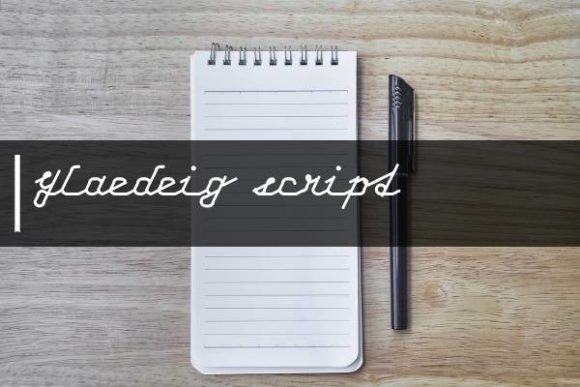
At its core, Glaedeig Script is defined by its attempt to bridge the gap between digital precision and organic imperfection. Christian Munk designed this font to recreate the fluid lines of a classic pen, capturing the subtle variations in pressure and flow that make handwriting feel personal. Unlike some script fonts that rely heavily on chaotic loops and aggressive slants, Glaedeig takes a more restrained approach. The characters are described as slim and curvy, creating a visual rhythm that feels light and airy rather than heavy and imposing.
The most defining characteristic of the typeface is its connectivity. The characters are "tied together at the base," meaning the baseline is continuous and unbroken. This structural decision has a significant impact on the font's usability. In many modern script fonts, connections between letters can be jagged or inconsistent, which sometimes forces the user to manually adjust kerning or tracking. With Glaedeig Script, the tied baseline ensures a smooth, consistent flow from one letter to the next. This design choice mimics the experience of writing without lifting the pen from the paper, resulting in a cohesive word shape that is easier for the eye to follow.
Aesthetic Versatility: Where Glaedeig Script Fits
When evaluating a font for a project, the "vibe" is often the deciding factor. The aesthetic of Glaedeig Script positions it in a specific middle ground. It is neither as formal as a traditional Copperplate script, nor as casual as a rough, grunge-style handwriting font. Instead, it occupies a space best described as "elegant casual" or "contemporary classic."
This versatility makes it suitable for a wide range of applications, particularly where a human touch is desired without sacrificing sophistication. Consider the following scenarios:
- Wedding and Event Stationery: The slim, curvy nature of Glaedeig Script lends itself well to invitations and save-the-dates. It offers the romance of calligraphy but with a cleaner, more modern readability that appeals to contemporary tastes.
- Branding for Lifestyle Products: For brands selling artisanal goods, cosmetics, or boutique fashion, this font can convey a sense of craftsmanship. It suggests that a product is made with care, mimicking the look of handwritten labels or personalized packaging.
- Editorial Headers: In magazine layouts or blog design, using Glaedeig Script for pull quotes or headers can break up the monotony of standard serif or sans-serif body text, adding a layer of personality to the page.
However, it is important to recognize the limitations inherent in this style. Because the characters are slim and tied together, they may lack the visual weight required for bold, aggressive advertising or signage that needs to be read from a distance. In those contexts, a heavier, more structured script or a bold sans-serif might be the more practical choice.
Comparing Glaedeig Script to Other Script Categories
To truly understand the value of Glaedeig Script, one must compare it to the different categories of script fonts available to designers. The "handwritten" category is broad, and Glaedeig represents a specific subset of it.
Modern Calligraphy vs. Classic Penmanship
Many popular script fonts fall into the "modern calligraphy" category, characterized by extreme thick-to-thin contrast and unpredictable bouncing baselines. These fonts are trendy and expressive, but they can sometimes be difficult to read in long sentences. Glaedeig Script leans more toward classic penmanship. The consistency of the baseline and the uniformity of the stroke width (compared to high-contrast calligraphy) make it a safer choice for legibility. If a project requires a font that looks handwritten but remains professional and easy to scan, Glaedeig often outperforms the more chaotic calligraphic styles.
The "Messy" Handwriting Aesthetic
On the other end of the spectrum are fonts designed to look like hurried, messy notes. While these are excellent for specific use cases—like a detective board in a video game or a casual teen brand—they are rarely appropriate for professional communication. Glaedeig Script offers a polished alternative. It retains the personality of handwriting but cleans up the "messiness," making it appropriate for corporate communications that want to soften their tone, such as thank-you cards or personalized email headers.
Technical Considerations and Legibility
For the practical researcher, aesthetics are only half the battle. Technical performance is equally vital. One of the strengths of Glaedeig Script is its legibility at smaller sizes. Because the lines are "recreating lines original to a classic pen," the letterforms are generally open and distinct. The 'a' looks like an 'a', and the 'o' looks like an 'o'—a distinction that is sometimes lost in overly stylized scripts where letters merge into unrecognizable shapes.
However, users should be mindful of color contrast. Because the font features slim strokes, it requires a high-contrast background to remain readable. Setting Glaedeig Script in a light grey text on a white background, for example, would likely result in a loss of detail. It performs best when set in a solid, dark color against a clean background.
Furthermore, while the "tied at the base" feature is aesthetically pleasing, it creates a long, continuous word shape. This means that Glaedeig Script is not suited for all-caps settings. Script fonts generally struggle with capitalization, and Glaedeig is no exception. Its strength lies in lowercase flow; forcing it into uppercase can break the design logic and reduce readability.
Decision Factors: Is Glaedeig Script the Right Choice?
Making a final decision on typography involves weighing tradeoffs. To determine if Glaedeig Script is the right resource for your project, consider the following factors:
- The Need for Speed vs. Precision: If you need a font that looks like it was written quickly and furiously, Glaedeig is likely too structured. If you need a font that looks like it was written carefully and elegantly, it is an excellent fit.
- Context of Use: Glaedeig excels in display sizes (headers, logos, invitations) but should be used with caution for body text. Long paragraphs set in any script font can cause eye strain; Glaedeig is best kept for short bursts of text where its personality can shine.
- Brand Alignment: Does your brand voice speak with a whisper or a shout? Glaedeig Script speaks with a confident, polite whisper. It aligns well with brands that value tradition, elegance, and approachability.
- Alternatives and Competition: If you find Glaedeig too slim, you might look for a "brush script" which offers thicker strokes. If you find it too connected, you might look for a "signature font" that has more separation between letters. Understanding what you don't like about Glaedeig helps you find its competitors.
Practical Application: Realistic Examples
Imagine you are designing a website for a high-end bakery. You want the headers to feel warm and homemade. Glaedeig Script would be a strong candidate here. The "classic pen" feel suggests that recipes are passed down through generations. The slim curves add a touch of femininity and delicacy, suitable for pastries and cakes.
Conversely, imagine you are designing a logo for a construction company. While you want to appear approachable, the "slim and curvy" nature of Glaedeig might convey fragility rather than strength. In this scenario, a different category of font—a sturdy serif or a bold sans-serif—would better represent the structural integrity of the business. This comparison highlights that a font is rarely "good" or "bad" in a vacuum; it is only effective or ineffective relative to the message it must carry.
Conclusion
Glaedeig Script, designed by Christian Munk, represents a thoughtful entry into the modern handwritten font market. Its commitment to a continuous baseline and its slim, curvy character shapes offer a solution for those seeking elegance without the chaos of modern calligraphy. It is a tool best used for adding a human, sophisticated touch to branding, stationery, and headers. By understanding its specific strengths—legibility, flow, and classic pen aesthetics—and acknowledging its limitations regarding weight and boldness, you can make an informed decision. Whether you are finalizing a wedding invitation or refining a brand identity, Glaedeig Script offers a distinct voice worth considering in your typographic toolkit.