Goodline Font: A Practical Guide to This Modern Monoline Typeface
In the vast world of typography, finding a font that balances simplicity with character can be a challenge. The Goodline font presents itself as a solution for designers seeking a clean, modern aesthetic without sacrificing personality. As a monoline typeface, it is defined by its consistent stroke width, which gives it a distinctive, hand-drawn quality. This article provides a balanced evaluation of the Goodline font, exploring its strengths, ideal applications, and potential limitations to help you decide if it's the right choice for your next project.
Understanding the Core Characteristics of Goodline Font
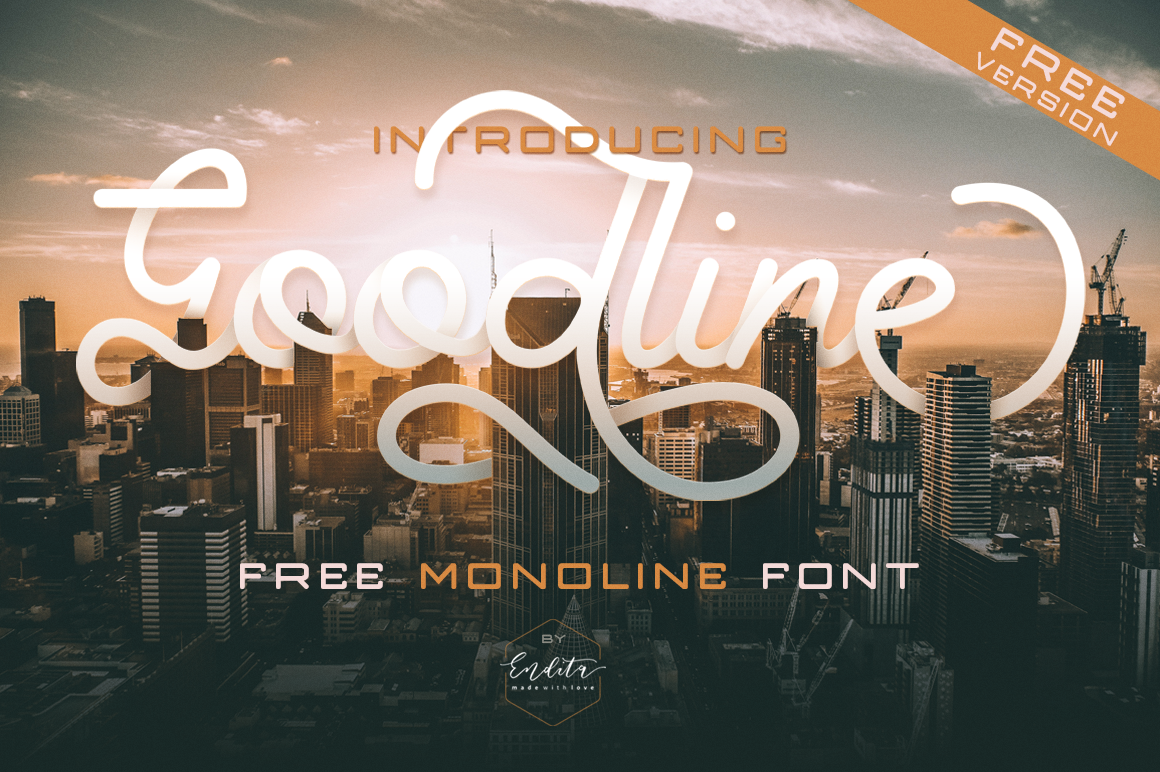
At its heart, the Goodline font is a monoline script. This means every letter is constructed with lines of uniform thickness, creating a cohesive and rhythmic visual flow. Unlike serif or bold sans-serif fonts, its elegance comes from its simplicity and movement. The letterforms often feature gentle curves and a subtle, organic quality that suggests a hand-lettered origin, even though it is a digital typeface. This combination of uniform weight and graceful shapes is what gives Goodline its "stunning" display potential, particularly for headlines and short bursts of impactful text.
It is crucial to understand that Goodline is primarily a display font. Its design prioritizes visual impact and aesthetic appeal for short-form text over pure legibility for long-form reading. The very characteristics that make it beautiful—its flowing connections and consistent thin line—can reduce readability in small sizes or dense paragraphs. Therefore, its role is typically complementary, used to add a touch of modern flair rather than to convey large volumes of information.
Evaluating the Benefits: Why Consider Goodline?
Designers and creators are drawn to typefaces like Goodline for several practical reasons. The primary benefit is its ability to instantly impart a clean and modern look. In an era where minimalist and contemporary design is highly valued, a font that achieves this with inherent grace is a valuable asset. It can make a project feel current, sophisticated, and thoughtfully crafted.
Another significant advantage is its versatility in specific contexts. The Goodline font shines in applications where a personal yet polished tone is desired. Think of wedding invitations, boutique branding, lifestyle blogs, or social media graphics. Its movement and grace can evoke feelings of elegance, creativity, and approachability. For a designer, it offers a way to add a distinct voice to a headline or logo without resorting to overly decorative or complex scripts that might feel dated or fussy.
Furthermore, as a free resource, it presents a low-risk opportunity for experimentation. Designers can test it in mockups and personal projects to see how it aligns with their vision before committing to a commercial license, if one is required for broader use.
Practical Considerations and Potential Tradeoffs
No typeface is universally perfect, and a clear-eyed evaluation of Goodline must include its limitations. The most significant tradeoff is the balance between style and readability. While excellent for a 48-point headline, it may become difficult to read at 12-point body text. This makes it unsuitable for primary body copy in documents, websites, or reports where clarity is paramount.
Another consideration is its specificity. The "monoline" and "movement" that define Goodline also define its niche. It carries a particular aesthetic—modern, slightly organic, and elegant. If your project requires a tone that is formal, authoritative, technical, or deeply traditional, this font may not be the appropriate tool. Using it in an incongruous context, such as a corporate legal document or a gritty industrial brand, could undermine the intended message.
Designers should also be mindful of pairing. Goodline requires a complementary companion font for body text or supporting information. Selecting a neutral, highly legible sans-serif or a classic serif font is essential to create hierarchy and ensure the overall design remains functional and balanced.
Scenarios Where Goodline Font Excels
Identifying the right context is key to leveraging Goodline effectively. It is a strong fit for projects where the goal is to capture attention and establish a specific, contemporary mood.
- Branding and Logo Design: For lifestyle brands, artisanal products, cafes, or personal blogs, Goodline can form the core of a logo, conveying a handcrafted yet professional image.
- Event Stationery: Its elegance makes it suitable for save-the-dates, invitations, and event programs where a personal, sophisticated touch is desired.
- Digital Headlines and Pull Quotes: On websites and in digital magazines, it can be used for article titles or featured quotes to break the monotony of standard web fonts and draw the reader's eye.
- Packaging and Merchandise: Product labels, especially for cosmetics, specialty foods, or apparel, can benefit from its clean aesthetic to appear modern and upscale.
When to Explore Alternatives to Goodline
There are clear situations where other typefaces will serve you better. If your primary requirement is maximum legibility at small sizes, such as for body text on a website, an e-book, or a technical manual, you should opt for a font specifically engineered for that purpose, like a robust sans-serif (e.g., Open Sans, Lato) or a readable serif (e.g., Merriweather, Georgia).
For projects demanding a tone of serious authority, such as a law firm's website, a financial report, or an academic journal, the graceful movement of Goodline may be perceived as too casual. A more traditional serif or a sturdy, neutral sans-serif would project greater stability and trustworthiness.
Similarly, if the design brief calls for a bold, impactful, and high-energy aesthetic, a thick geometric sans-serif or a powerful slab serif would be more effective than the delicate, uniform lines of a monoline font. The key is to match the font's personality to the project's core message.
Making Your Decision: Does Goodline Align With Your Goals?
To determine if the Goodline font is right for you, start by defining your project's core needs. Ask yourself these practical questions:
- What is the primary function of the text? Is it for a short, impactful headline or for conveying detailed information?
- What emotion or brand personality should the typography convey? Is it modern, elegant, personal, and approachable?
- Who is the audience, and what are their expectations? Will they respond to a contemporary, stylized font?
- How will this font pair with others in the design system? Do you have a legible companion font ready?
If your answers point toward a need for a modern, elegant display font for headlines and short text, and your audience appreciates a clean, contemporary aesthetic, then the Goodline font is a compelling option worth testing. Its ability to add movement and grace with simplicity is its greatest strength. By understanding its intended use case and respecting its limitations, you can make an informed decision and use this typeface to create outstanding, effective designs.